
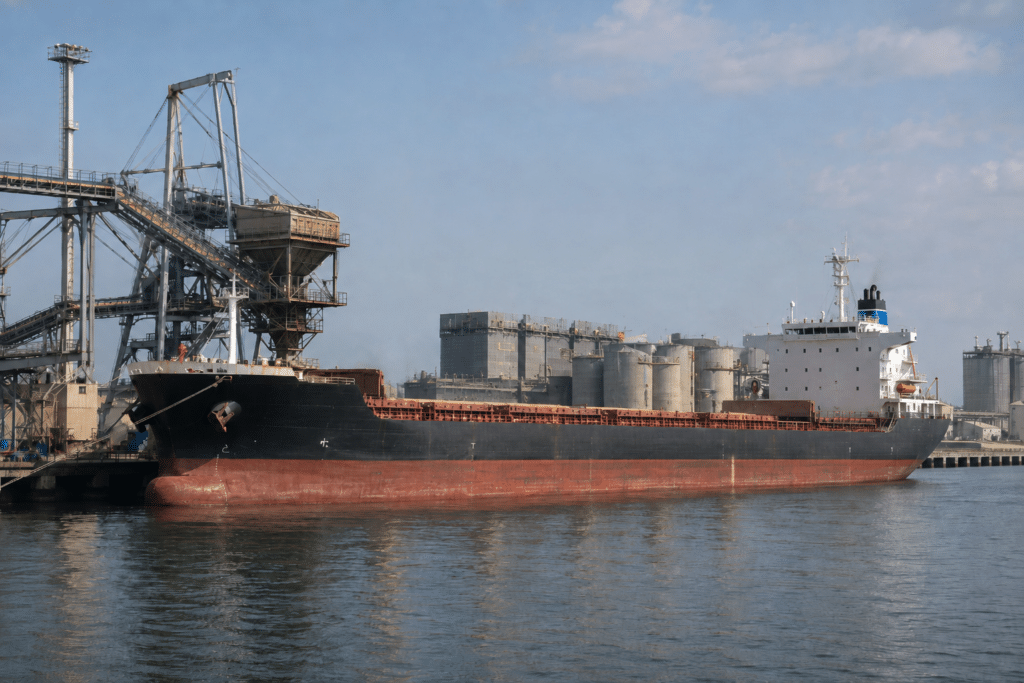
A cargo can be commercially ready long before it is operationally ready. Grain may be available at the terminal, steel may be packed and scheduled for export, and the sale contract may set a delivery window. Yet the shipment can still face avoidable delay if the nominated vessel, berth restrictions, cargo documentation, and loading sequence have not been considered together.
International bulk cargo shipping is therefore not simply the movement of a large volume of goods between two ports. It is a coordinated maritime operation in which vessel suitability, cargo condition, port capability, weather exposure, and communication all affect the final result. For cargo owners, charterers, traders, and industrial shippers, good planning begins before a vessel is fixed and continues until discharge is complete.
What International Bulk Cargo Shipping Requires
Dry bulk and general cargo trades cover a wide range of commodities, each with different handling requirements. Grain requires clean and dry cargo spaces, careful documentation, and attention to ventilation and moisture risk. Fertilizer may require particular care regarding contamination, corrosion, and stowage separation. Steel products can be sensitive to contact with water, condensation, and improper lashing. Even where two cargoes have similar volumes, the operational approach may be very different.
The first question is not simply whether a vessel has sufficient deadweight. The practical question is whether the vessel is suitable for the intended cargo, ports, and voyage conditions. Draft limits, hatch dimensions, gear availability, hold condition, crane outreach, grab use, cargo securing arrangements, and expected port productivity can all influence vessel selection.
A smaller coaster may be appropriate for a shallow port, a restricted berth, or a regional parcel movement. A Handysize vessel may offer greater flexibility for cargoes moving through ports with limited infrastructure, particularly where shipboard cranes are required. The right choice depends on the trade, the cargo quantity, loading and discharge arrangements, and the commercial consequences of delay.
Vessel suitability is a commercial decision
Choosing a vessel solely on the basis of freight can create costs elsewhere in the voyage. A lower freight indication may be less attractive if the vessel cannot safely meet a port restriction, requires costly waiting time, or is poorly matched to cargo handling equipment. Conversely, a vessel with the right gear, hatch configuration, and operational profile may support faster and more controlled cargo operations.
This is why early exchange of accurate information matters. Cargo interests should identify the commodity, quantity, loading and discharge ports, loading terms, discharge terms, laycan, expected cargo readiness, and any special requirements. The shipowner or operator can then assess whether the vessel and voyage plan are realistic.
The Operational Work Begins Before Loading
A charter party records the principal commercial agreement, but it does not remove the need for daily operational coordination. Once a vessel is nominated, the parties must align information from the vessel, agent, terminal, charterer, cargo surveyor, and receiving party. A small gap in instructions can become a larger issue at berth.
Before arrival, the operation should address four practical areas:
- cargo hold readiness and any cleaning, inspection, or certification requirements;
- port restrictions, berth prospects, draft limits, and required notices;
- loading or discharge sequence, including trim, stability, and safe working limits; and
- cargo documents, shipping instructions, bills of lading, and the allocation of operational responsibilities.
These points are interrelated. A loading sequence affects vessel stability and trim. Trim may affect draft restrictions at a particular berth or channel. Documentation must correspond with the cargo actually loaded. If the terminal changes the loading plan, the vessel and commercial parties need timely notice so that the implications can be assessed.
For weather-sensitive cargoes, attention to hatch management is especially important. Rain interruptions are not merely an inconvenience. They can affect cargo condition, terminal productivity, and the record of events that supports later commercial discussions. Clear notices, accurate logs, and disciplined communication help all parties understand what happened and when.
Cargo Care Depends on the Commodity
Cargo care is not a single procedure. It is a series of decisions based on the commodity and voyage environment. With grain, the condition and cleanliness of holds, protection from water ingress, and ventilation practices may be central concerns. With steel, the risk of rust and condensation requires attention to the cargo’s condition at loading, stowage method, separation materials, and protection during port operations.
Fertilizer presents another set of considerations. Some grades can be hygroscopic, corrosive, or sensitive to contamination. The required preparation of holds and the suitability of adjacent cargoes should be reviewed carefully. Cargo declarations and handling instructions should be specific enough to allow the vessel and terminal to prepare properly.
General cargo often requires more detailed stowage planning than homogeneous bulk cargo. Different parcel dimensions, package strengths, lifting arrangements, and securing needs can affect the loading rate and the distribution of cargo within the vessel. A practical stowage plan is not paperwork for its own sake. It helps protect the cargo, preserve vessel safety, and support orderly discharge at the destination.
Port Readiness Can Change the Voyage Plan
Port conditions are among the most influential variables in international dry bulk shipping. A vessel may be suitable in principle but face restrictions related to draft, air draft, berth length, tidal windows, crane availability, or congestion. Seasonal weather can also alter the expected pace of loading and discharge.
Black Sea and Mediterranean trades illustrate this point clearly. Ports within the same region can differ significantly in berth arrangements, cargo handling methods, and documentation practices. A voyage plan should account for the specific loading and discharge ports rather than relying only on regional assumptions. The same applies when trading to the Baltic, Persian Gulf, Far East, or other international waters.
Timing also requires realism. Estimated arrival times are useful for planning, but they remain estimates. Weather, congestion, pilotage, canal or strait transit, berth availability, and cargo readiness can all affect the actual schedule. Good operators communicate changes early and distinguish between confirmed information and operational expectations.
Chartering Should Connect Commercial Terms and Reality
The chartering stage is where commercial expectations must be tested against operational facts. Freight, laytime, demurrage, dispatch, loading and discharge terms, and trading limits all influence the economics of a shipment. However, the wording of commercial terms should reflect the physical conditions of the ports and cargo.
For example, a high loading rate may appear reasonable in a negotiation but may not be achievable with the terminal’s equipment, weather pattern, or cargo presentation. A broad trading range may provide flexibility but can become difficult if the vessel’s characteristics, class requirements, or port restrictions narrow the realistic options. The value of experienced chartering is not only in obtaining a fixture. It is in identifying these points before they become disputes or delays.
For a family-owned company such as Emiroglu Shipping, active in dry bulk and general cargo trades since 1998, direct involvement in vessel operations supports this connection between fixture terms and voyage execution. Commercial commitments are stronger when the people arranging the voyage understand the vessel, the cargo, and the practical demands of the trade.
Communication Is Part of Cargo Protection
Clear communication is often treated as an administrative task. In practice, it is part of cargo care and voyage control. Accurate notices of readiness, port updates, loading statements, weather reports, cargo figures, and document status allow each party to make decisions with the same operational picture.
This does not mean that every issue can be prevented. Ports can close, cargo can arrive late, and weather can interrupt operations. What matters is how quickly the relevant facts are shared and whether the parties maintain a clear record of actions taken. Early escalation of a draft concern, a hold condition issue, or a document discrepancy gives the commercial side more time to respond.
The strongest shipping relationships are usually built through this routine discipline. Cargo owners and charterers need a counterpart that communicates directly, plans realistically, and treats vessel operations as central to the service, not as a separate activity after the fixture is concluded.
International bulk cargo shipping works best when commercial planning and shipboard reality remain connected from the first cargo inquiry to final discharge. The practical standard is simple: select the right vessel, prepare for the actual ports and cargo, and keep every operational decision visible to the parties who depend on it.