
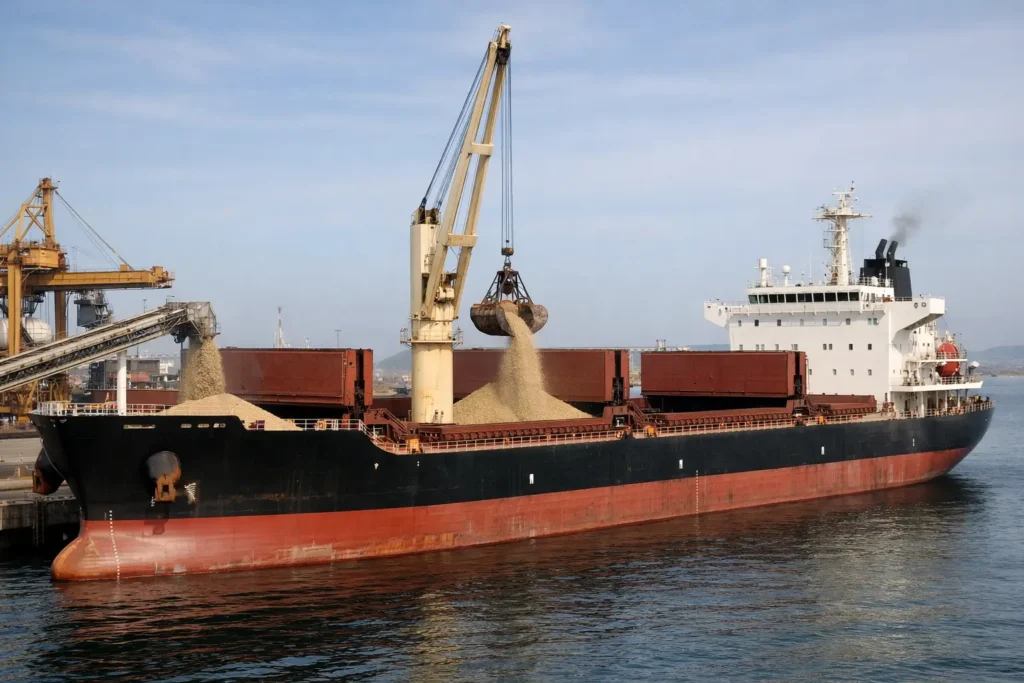
A voyage charter for bulk cargo is not secured when the recap is agreed. It is secured through a chain of operational decisions that starts with matching the vessel to the cargo and ends only when freight, disbursements, laytime, and documents have been reconciled. A missed draft limitation, an unclear berth prospect, or an unsigned mate’s receipt can turn an apparently workable fixture into a costly dispute.
For cargo owners, charterers, traders, and brokers, the purpose of voyage control is straightforward: convert charter-party terms into a voyage that can actually be performed. This requires disciplined communication among the charterer, owner, master, agent, terminal, shipper, receiver, and where applicable, P&I correspondents and surveyors.
Start the voyage charter for bulk cargo with vessel suitability
Before a vessel is fixed, the commercial description must be tested against physical port and cargo reality. Cargo quantity and tolerance, loading and discharge ports, laycan, intended loading and discharge rates, and freight terms are only the starting point. The vessel’s summer draft, air draft, TPC, hatch dimensions, hold configuration, gear, grab compatibility, and speed-consumption profile all affect whether the proposed employment is realistic.
Stowage factor deserves particular attention. A low-stowage-factor cargo may be limited by deadweight before hold volume is used, while a high-stowage-factor cargo can fill the holds before the vessel reaches her permissible draft. Steel products raise additional questions about loading sequence, lashing requirements, dunnage, and water-tight integrity. Grain and fertilizer require careful attention to hold cleanliness, residue risk, ventilation instructions, and the division of responsibility for cargo preparation.
Port restrictions can change the calculation. A vessel acceptable at anchorage may be unsuitable for an inside berth because of draft, air draft, crane outreach, turning-basin limits, or a berth’s loading arrangement. The chartering team should obtain realistic berth prospects rather than rely on a port name alone. Local port rules, terminal requirements, class restrictions, and trading permissions require case-specific verification.
In Black Sea and Mediterranean trades, this work often involves short sea passages but demanding port interfaces. Emiroglu Shipping’s operational experience in dry bulk and general cargo movements supports the practical review required before a ship is committed. The same principle applies in longer Baltic, Far East, or Persian Gulf employment: the voyage estimate must reflect the actual ports, not just the headline route.
Turn the recap into clear voyage orders
Once fixed, the signed charter party and recap should be reviewed line by line before operational orders are issued. The voyage order should state the parties, cargo, quantity, loading and discharge range, laycan, freight basis, commission structure, payment terms, applicable riders, and contacts. It should also identify the clauses that affect day-to-day decisions, including NOR, laytime commencement, reversible or non-reversible terms, demurrage, despatch, notice periods, and bunkering responsibility.
Charterers’ instructions must be compared against the charter party. An instruction to proceed to a different berth, issue a particular bill of lading wording, accept a new cargo declaration, or commence operations in rain may create exposure if it conflicts with agreed terms or safe practice. The owner or operator should acknowledge instructions in writing, identify deviations promptly, and seek clarification before the master is placed in an uncertain position.
Agency nomination is another early control point. The nominated agent must be able to provide current port restrictions, berth line-up, cargo readiness, formalities, estimated port disbursements, and practical communications with terminal and authorities. A preliminary disbursement account should be checked against the agreed agency terms and expected services. The final disbursement account later needs the same discipline: compare invoices, supporting vouchers, exchange rates, commissions, advances, and contractual deductions before closing the port file.
Manage ETA, readiness, and loading evidence
ETA notices are operational records, not routine messages. They should be sent at the contractual intervals, supported by an achievable passage plan, and revised when weather, congestion, canal transit, or other material factors change the forecast. Late or inaccurate notices can affect berth planning and may have laytime consequences depending on the charter-party wording.
Before arrival, the master and operator should confirm hold readiness, cargo-space condition, ballast plan, stability, trim, and the proposed stowage plan. A stowage plan is not simply a distribution of tons between holds. It must account for stress, stability, trim, port sequence, hatch access, loading equipment, discharge method, and any segregation requirements. If a terminal’s preferred loading sequence conflicts with safe loading limits, the master must raise the issue before loading progresses.
The NOR process requires care. The vessel must be at the contractual place and ready in the manner required by the charter party. Whether a notice can be tendered at anchorage, outside port limits, or before free pratique depends on the agreed wording and local circumstances. A premature or invalid NOR may shift the laytime calculation and weaken a later demurrage claim. When facts are unclear, records of arrival, communications, pilot advice, and port status should be retained.
During loading, daily loaded quantities should be circulated with the vessel’s draft, remaining capacity, loading rate, weather interruptions, and expected completion time. This gives all parties an opportunity to correct quantity, trim, or documentation issues before completion. Draft surveys should be arranged where contractually required or operationally appropriate, with survey figures reviewed against terminal and ship records. Material differences need timely investigation, not an assumption that they will disappear in the final statement.
Protect the bill of lading and cargo position
The draft bill of lading should be reviewed before signature against the mate’s receipts, charter-party requirements, cargo declaration, shipped quantity, loading dates, marks, and apparent order and condition. A bill of lading is a transport document with commercial consequences; it should not be treated as a clerical formality.
If the mate’s receipt contains remarks, the bill of lading should not be issued clean without proper authority and case-specific advice. Steel cargoes may warrant P&I attendance where the nature of the cargo, pre-shipment condition, loading circumstances, or contractual requirements justify it. The purpose is to document facts accurately, not to create a presumed claim position.
Prepaid bill of lading requests also require caution. A prepaid notation should only be used when freight has been paid or when the charter-party and the responsible parties support that action. Freight invoices, payment status, and SWIFT evidence should be checked before releasing originals. Where original bills are unavailable at discharge, any letter of indemnity procedure must follow the agreed form, counterparty requirements, and applicable P&I, legal, and port guidance. No operator should assume that an LOI removes all risk.
Control port time, weather, and discharge performance
At discharge, the operative questions are often practical: Is the berth available? Are grabs suitable? Is cargo flowing continuously? Is the receiver ready? Does weather permit safe operations? Rain-discharge suitability depends on the cargo, packaging or condition, terminal arrangements, hatch exposure, and master’s judgment. A general instruction to work through rain is not a substitute for cargo-specific assessment.
Port productivity should be measured against the contractual basis and the actual statement of facts. Time records should show notices, berth shifts, stoppages, weather, holidays, shore delays, hatch movements, and any periods claimed as exceptions. When an event may affect laytime, a protest letter should be considered promptly and supported by contemporaneous facts. A protest sent after the event is less useful if the underlying record is incomplete.
Laytime calculations should follow the signed charter party, not assumptions from a previous fixture. The effect of weekend exceptions, weather working days, shifting time, congestion, strikes, and reversible terms depends on the clause wording. Demurrage and despatch calculations should be checked against notices, statements of facts, time sheets, and correspondence before either party issues a final claim or settlement proposal.
Close the file only after the money and records agree
The voyage is not fully complete at sailing or discharge completion. Freight invoices should be reconciled with the agreed freight rate, quantity basis, commissions, deductions, and payment triggers. SWIFT evidence may confirm that a transfer has been initiated, but the accounting record should also reflect receipt, value date, bank charges, and any short payment.
Bunker arrangements need the same attention. If bunkers are for charterers’ account, delivery quantities, grades, sampling, and pricing references should be documented. If the vessel changes employment, remaining onboard figures and agreed valuations can affect the final settlement. Small differences left unexplained can become disproportionate administrative disputes later.
A complete closure file normally brings together the charter party and recap, voyage orders, notices, agency accounts, cargo documents, surveys, statements of facts, laytime calculation, freight evidence, and final correspondence. It provides an audit trail and improves the next fixture because the team can see where assumptions proved correct and where port reality differed. Careful closure is not paperwork for its own sake – it is how a well-run voyage charter preserves commercial confidence for the next cargo.