
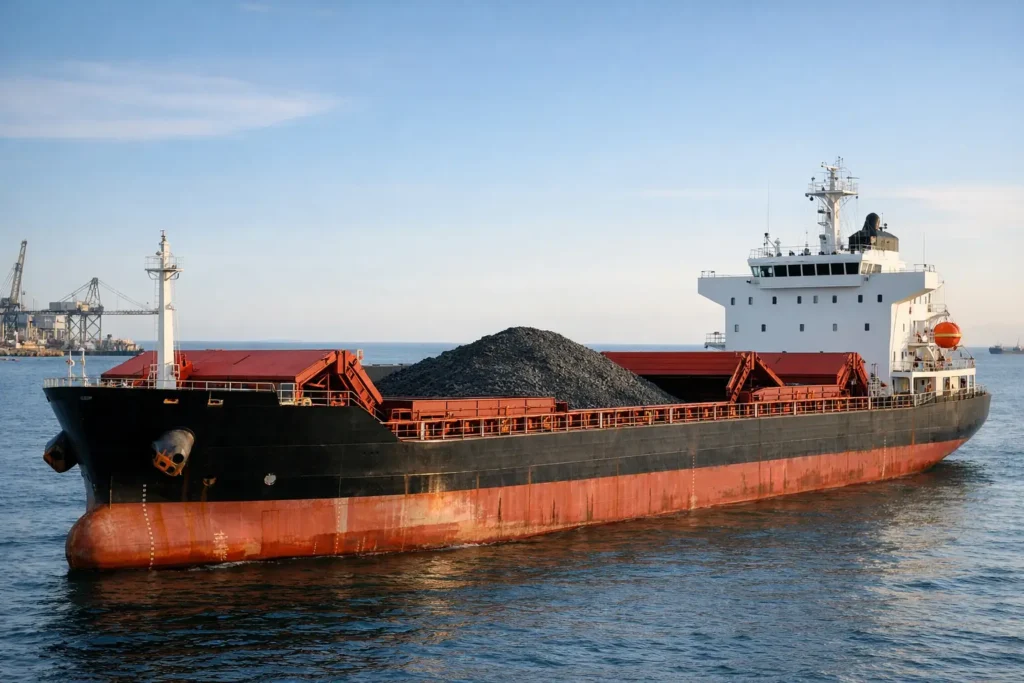
A cargo description on a recap may look straightforward, but dry bulk cargo types determine far more than the commodity name shown on a bill of lading. They affect vessel suitability, hold preparation, loading sequence, draft limitations, documentation, port productivity, and the financial outcome of a voyage. A mismatch between cargo characteristics and voyage planning can turn an otherwise workable fixture into delay, cargo claims, or disputed laytime.
For cargo owners, charterers, traders, and brokers, the first question is not simply whether a vessel has sufficient deadweight. The practical question is whether the vessel, port, charter-party terms, and cargo condition can work together safely and commercially.
What falls within dry bulk cargo types?
Dry bulk cargoes are loose, unpackaged commodities carried in bulk in a vessel’s cargo holds. They are commonly divided into major bulks and minor bulks. Major bulks generally include iron ore, coal, grain, and bauxite or alumina. Minor bulks cover a much broader group, including fertilizers, minerals, agricultural products, salt, cement clinker, scrap, petcoke, aggregates, and many industrial raw materials.
The commercial label alone is not enough. “Fertilizer,” for example, may refer to several products with different moisture sensitivity, contamination risks, trimming requirements, and carriage instructions. A cargo declaration should identify the precise commodity, relevant International Maritime Solid Bulk Cargoes Code classification where applicable, moisture information, hazards, and any special loading or segregation requirements. The applicable charter party, port rules, P&I guidance, class requirements, and local law must be checked case by case.
Steel products are often discussed alongside dry bulk because they move on similar coaster and Handysize trading routes. Operationally, however, coils, billets, rebar, pipes, plates, and wire rod are general cargo or breakbulk rather than loose bulk cargo. Their planning requirements differ materially, particularly around dunnage, lashing, stowage plans, hatch access, cargo securing, and water damage exposure.
Key dry bulk cargo types and their operating demands
Grain and agricultural commodities
Grain cargoes such as wheat, corn, barley, and soybeans require clean, dry, odor-free holds. Hold readiness begins before the vessel arrives at the load port. Previous cargo residues, loose scale, standing water, infestation evidence, and hatch-cover condition can all affect inspection results and loading readiness.
Stowage factor is central to grain planning. A low-density cargo may cube out the vessel before reaching its deadweight capacity, while a denser cargo may be limited by draft, seasonal restrictions, or port depth. The loading plan must also account for stability, trim, tank condition, and the sequence in which holds are filled. Grain carriage requirements and stability documentation should be verified for the vessel and trade concerned rather than assumed from a previous voyage.
Rain is a frequent operational issue. Whether loading or discharge can continue depends on the commodity, terminal arrangements, hatch exposure, cargo condition, surveyor instructions, and contractual wording. A decision to work in marginal weather without clear authority can create a preventable moisture claim.
Fertilizers and mineral cargoes
Fertilizers range from relatively straightforward products to cargoes that are hygroscopic, corrosive, dusty, or sensitive to contamination. The shipper’s cargo information, material safety documentation where applicable, and hold-cleanliness standard should be reviewed before loading starts. A vessel may need specific preparation, including removal of rust scale, dry bilges, protected sounding pipes, and clear separation from incompatible residues.
Mineral cargoes, salt, clinker, sulfur, and similar commodities create different pressures. Some are abrasive; some generate dust; others may affect coatings or require careful cleaning after discharge. Moisture content can also matter where cargo behavior changes during the voyage. The cargo’s declared characteristics, not a generic commodity category, should drive the operational plan.
Coal, petcoke, and other carbon cargoes
Coal and petcoke may present risks related to self-heating, gas emission, oxygen depletion, or cargo temperature, depending on the grade and declaration. The master needs complete cargo information before loading, including any monitoring, ventilation, or safety instructions required under the applicable code.
Commercial urgency must not replace documented cargo checks. If declarations are incomplete, temperature issues are reported, or the shipper’s information conflicts with observed conditions, the matter should be escalated before the vessel is committed to loading.
Steel products and project-related general cargo
Steel is highly sensitive to water damage, handling marks, and shortage allegations. Coil loading requires attention to coil position, weight distribution, cradles or dunnage, lashing arrangements, and access for safe securing. Billets and rebar raise separate concerns around stowage, hatch dimensions, crane or shore-gear capability, and the accuracy of tally records.
For steel cargoes, P&I attendance may be appropriate where contract terms, cargo condition, port practice, or claim exposure warrants it. The survey scope should be clear: condition, tally, loading method, lashing, draft survey observations, or all of these. A vague instruction after loading has begun is less useful than a defined plan before the vessel berths.
Matching cargo to vessel and port
The correct vessel is not always the largest available vessel. Cargo quantity, stowage factor, loading rate, discharge rate, berth draft, air draft, hatch dimensions, gear, grabs, and terminal restrictions can all decide whether a ship is suitable. A geared vessel may be preferable at a port with limited shore equipment, while grab discharge can affect cargo loss, hold damage, and cleaning time.
Draft planning must reflect more than the vessel’s summer marks. Port and channel restrictions, freshwater allowance, tidal windows, berth depth, under-keel clearance, and expected consumption all matter. TPC is useful in estimating how additional cargo changes draft, but it does not replace a full loading calculation. The master remains responsible for vessel safety and stability, while charterers and operators must provide timely, accurate commercial and port information.
A workable stowage plan should identify cargo distribution by hold, expected quantities, loading sequence, trim, stability margins, and any segregation needs. If a hold is omitted or a loading sequence changes, the plan may need revision. Daily loaded quantities should be compared against the plan so that differences are recognized before they become a final draft or stability problem.
From fixture to file closure
The operational discipline begins as soon as the fixture is confirmed. Voyage orders should align with the recap and charter party: cargo description, quantity tolerance, laycan, loading and discharge ports, freight basis, payment terms, laytime provisions, demurrage and despatch terms, commission instructions, and any special clauses. Ambiguity in a voyage order often becomes a dispute later.
Before arrival, the operator should assess berth prospects, agency nomination, ETA notices, port documentation, bunkering needs, and the vessel’s readiness. The nominated agent provides local information, but berth expectations, draft restrictions, working hours, documentation cutoffs, and holiday interruptions should be checked rather than treated as fixed. A realistic ETA notice supports terminal planning; an unsupported ETA can damage coordination on both sides.
At the load port, hold readiness, cargo documentation, and the notice of readiness are closely connected. Whether NOR is valid depends on the charter-party wording and the vessel’s actual readiness in the relevant port circumstances. The time and place of tender, berth status, free pratique or customs formalities, and any agreed waiting-place provisions require careful review. A defective NOR can affect laytime calculations from the start.
During loading, the vessel should maintain daily records of loaded quantities, weather interruptions, stoppages, draft readings, protests, and communications with terminal and agent. Where terminal figures, ship figures, or draft-survey results differ, the discrepancy should be documented promptly. Protest letters are not a substitute for evidence, but they can preserve the vessel’s position when issued on a factual and timely basis.
Bills of lading require particular control. The draft B/L should be checked against the mate’s receipts, cargo quantity, shipper details, port information, freight wording, clausing, and charter-party requirements before signature authority is used. Prepaid B/L wording should not be accepted merely because freight is expected or partially invoiced. It should follow the agreed payment position and authorized instruction. If originals are unavailable at discharge, an LOI procedure must follow the charter-party terms, company policy, and the applicable legal and P&I requirements.
At discharge, the same discipline applies to notices, port logs, daily figures, draft surveys, damage observations, and cargo documentation. The suitability of rain discharge must be judged against actual conditions and cargo sensitivity, not commercial pressure alone. Bunker arrangements should be coordinated early enough to avoid conflict with berth windows, draft limits, or sailing orders.
After completion, operators should reconcile freight invoices, commissions, port disbursements, statements of facts, timesheets, notices, and supporting correspondence. PDA and final D/A checks need attention to the agreed agency appointment, supporting vouchers, and port-specific charges. SWIFT evidence and payment records should be retained with the freight file. Final laytime, demurrage, or despatch calculations depend on accurate source documents, not reconstructed recollections months later.
For Black Sea and Mediterranean trades, where weather, congestion, draft conditions, and port practice can change quickly, practical voyage coordination is a commercial safeguard. Emiroglu Shipping applies that discipline across dry bulk and general cargo operations, from fixture instructions through final file closure.
The useful measure of cargo planning is simple: every party should know what is being carried, how it will be loaded and discharged, which document controls each decision, and who must act before a delay becomes a claim.