
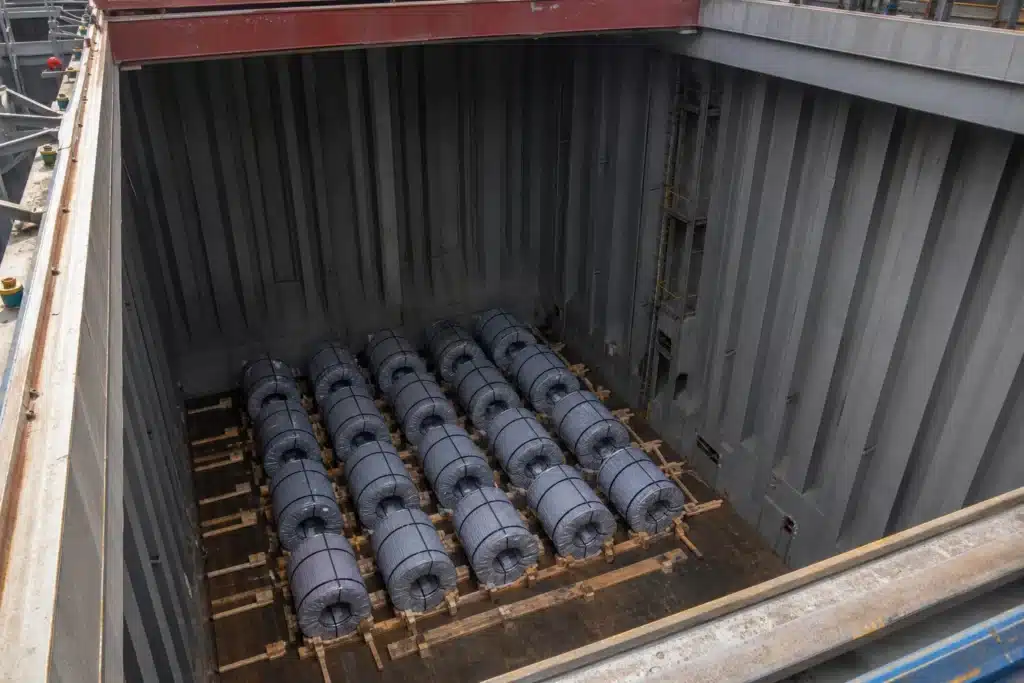
Steel coils can arrive at the discharge port with damage that began long before the vessel sailed. A wet hold, an unsuitable dunnage arrangement, a missed hatch-cover defect, or an overstowage decision can turn a sound cargo into a claim. To protect steel coils onboard, the chartering decision, loading plan, cargo paperwork, and voyage execution must work as one process.
For dry bulk and general cargo operators, coils require more than available deadweight and cubic capacity. Their high unit weight, concentrated loads, sensitivity to moisture, and potential for movement demand vessel-specific planning. The right vessel is not simply the vessel that can carry the quantity. It is the vessel whose holds, tank top strength, hatch dimensions, stability profile, gear, securing arrangements, and expected port conditions suit the cargo.
Start coil protection before the fixture
The pre-fixture stage determines whether the proposed voyage is operationally realistic. Charterers and owners should first establish the coil dimensions, unit weights, total quantity, packing condition, loading method, discharge method, and required stowage orientation. “Eye to side” and “eye to sky” are not interchangeable instructions. Each affects cradling, lashing, accessibility, and the distribution of weight on the tank top.
Cargo quantity must be tested against more than the vessel’s deadweight. The stowage factor for steel coils is low, but the cargo can create very high local loads. Tank top loading limits, hold geometry, and the proposed distribution between holds require review. A plan that works on a cargo declaration may fail when the actual coil weights are allocated by hold.
Hatch dimensions also matter. A coil may fit through the clear hatch opening but still be difficult to land safely in its intended position. This becomes critical where shore cranes, vessel gear, lifting beams, C-hooks, or coil grabs have operating limitations. The loading terminal’s method statement and the vessel’s available equipment should be confirmed before voyage orders are issued.
Draft restrictions, berth limitations, tidal windows, air draft, and channel limits can alter the quantity that can be loaded. So can the need to maintain adequate stability throughout the loading sequence. A commercially attractive parcel becomes less attractive if a part cargo, lightening arrangement, or delayed berthing is likely. These points belong in the fixture review, not in a last-minute exchange with the agent.
The charter party should also be read alongside the cargo specification. Clauses on dunnage, lashing materials, survey attendance, hold condition, weather working days, loading and discharge rates, and responsibility for cargo securing may allocate risk differently. Wording must be reviewed case by case. Port practice does not automatically override the agreed terms.
Hold readiness is a cargo-preservation task
Steel coils should not be loaded into a hold that is merely swept clean. The hold must be dry, free from residues, and suitable for the cargo described in the charter party and shipping instructions. Rust scale, loose paint, standing water, previous cargo residues, and damaged bilge protection can all create problems.
Before loading, the master and operator should confirm hold readiness, bilge condition, bilge wells, sounding arrangements, hatch-cover condition, and access points. A pre-loading survey may be appropriate where the cargo value, packing condition, or contractual terms justify it. If the hold is rejected, the reason should be recorded clearly and corrective work completed before loading resumes.
Moisture control requires disciplined judgment. Coils may be delivered with protective wrapping, but damaged wrapping does not make a wet hold acceptable. Rain during loading can expose bare edges, banding, and packaging. Whether loading should continue depends on the cargo condition, shipper’s instructions, terminal practice, weather, and charter-party wording. The master should not rely on an informal assurance where the cargo appears exposed.
Dew point management may also be relevant where a voyage involves material temperature differences or a change from cold to warm climates. Condensation can occur inside a closed hold even without direct seawater ingress. Ventilation decisions should be based on the actual cargo and ambient conditions, not a routine practice applied to every voyage.
Build the stowage plan around weight and movement
A steel coil stowage plan should show more than the number of coils in each hold. It should identify coil size and weight ranges, the location of each tier, dunnage lines, chocks or cradles, void spaces, access to bilges, and the securing method. It must also be checked against the vessel’s stability calculations and permissible tank top loads.
Dunnage is not a minor loading consumable. It distributes weight, creates drainage and inspection space where needed, and helps prevent direct contact between coils and the steel structure of the hold. Damaged, wet, undersized, or poorly positioned timber can crush, shift, or retain moisture. The required quality and quantity should be agreed early, especially where supply rests with a shore party.
Coils must be prevented from rolling, sliding, or settling as the vessel moves. Chocks, wedges, lashings, wires, chains, and other securing components should be suitable for the approved arrangement and inspected during loading. The exact method depends on coil orientation, tiering, hold shape, voyage conditions, and the vessel’s cargo securing guidance. It should not be copied from a previous cargo without checking the present stow.
Particular attention is needed at the ship’s sides, bulkheads, and the ends of a stow. Unrestrained voids may allow movement. Equally, forcing coils hard against structures can damage packaging or create pressure points. The loading superintendent, chief officer, terminal, and surveyor, where appointed, need a shared understanding of the sequence before the first coils are landed.
Protect the cargo after hatch closure
The cargo care plan continues at sea. Hatch covers must remain weathertight, and bilge soundings should be carried out and recorded in accordance with the vessel’s procedures. Any sign of water ingress, unusual bilge accumulation, hatch damage, or cargo shift requires prompt assessment and notification through the proper operational chain.
Weather routing and bunker planning have a direct cargo-care effect. A voyage plan should consider expected seasonal weather, sea area, shelter options, fuel margins, and the implications of heavy rolling or pitching. On Black Sea and Mediterranean voyages, changing seasonal conditions can affect both cargo exposure during port operations and the vessel’s motion at sea. Conditions and port requirements must be confirmed for the specific voyage.
The master’s daily reports, weather information, and exception reports give the operator an early warning of issues that may affect the cargo or schedule. A delayed arrival may also affect berth prospects, cargo receivers, survey attendance, and notice requirements. Commercial and operational teams should act on the same information rather than treating cargo care and voyage performance as separate subjects.
Documents preserve the factual record
When a concern arises, the written record often determines whether the parties can establish what happened and when. Mate’s receipts should accurately reflect cargo condition and any visible exceptions observed at loading. Draft bills of lading must match the signed mate’s receipts unless a properly authorized and documented change is made. Clean bills should not be issued where the observable facts require qualification.
Letters of protest may be necessary when loading is conducted contrary to instructions, when weather exposure is disputed, when dunnage or securing is inadequate, or when terminal actions create a documented concern. Their value depends on timing, facts, and service. A protest written after sailing may not correct a missed contemporaneous record.
At discharge, draft surveys, hatch-opening records, photographs, tally information, and survey reports may become relevant. If damage is alleged, the vessel should preserve evidence and seek case-specific advice from the owner, charterer, P&I interests, surveyor, and counsel as appropriate. No standard checklist can determine liability.
The post-fixture file should remain controlled through freight invoicing, SWIFT payment evidence, original bills of lading or agreed letter of indemnity procedures, PDA and disbursement account review, and laytime calculations. Loading or discharge delays connected with weather, survey disputes, or poor port productivity can affect demurrage or despatch. The statement of facts, NOR timing, notices, and charter-party exceptions must be checked against the actual sequence of events.
A practical operating discipline
emiroglu shipping, an Istanbul-based family-owned maritime company operating since 1998, approaches dry bulk and general cargo voyages through close coordination between chartering and vessel operations. That discipline is particularly relevant for steel products, where a small missed detail can have a large commercial consequence.
The useful question is not whether coils are generally suitable for shipment. It is whether this vessel, this stowage plan, this port method, and this weather window can preserve this cargo under the agreed terms. Asking that question early gives every party more time to correct the risk before the hatch is closed.