
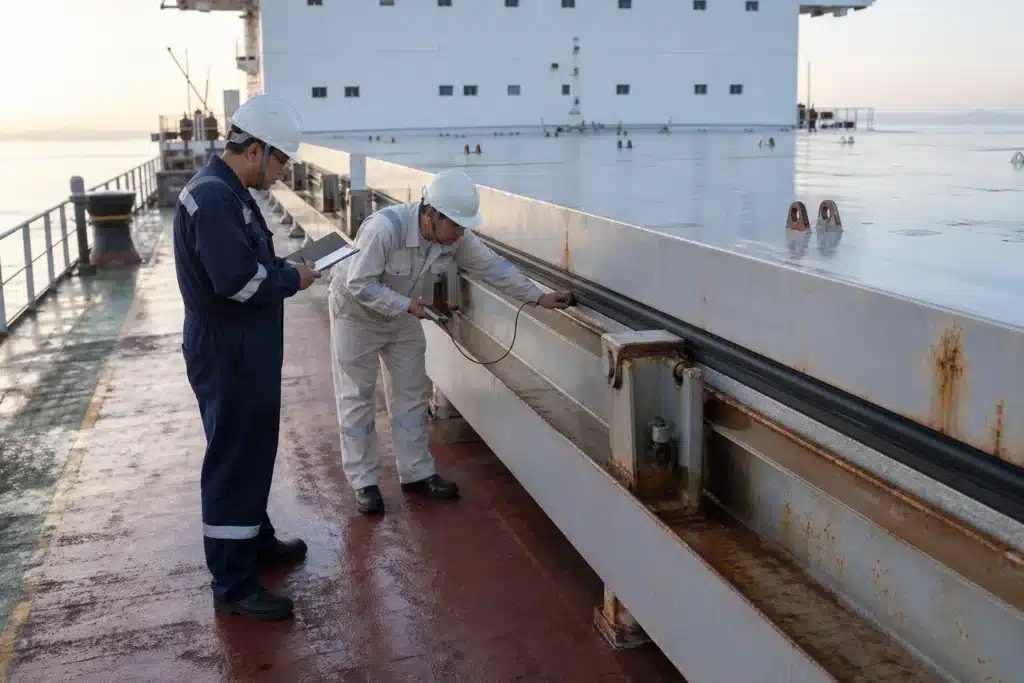
A wet cargo claim often begins with a defect that was visible before the first ton was loaded: hardened rubber packing, a blocked drain, a distorted coaming, or an unsecured cleat. Knowing how to check hatch covers is therefore not only a deck-maintenance task. It is a cargo-protection and charter-party control point that affects whether a vessel is genuinely ready to load.
For dry bulk and general cargo, hatch covers must protect the holds from rain, green seas, spray, and wash water throughout the voyage. The standard is normally weathertightness, not absolute watertightness. The distinction matters. A cover system may allow no water ingress in ordinary sea and weather conditions while still not being designed to resist sustained water pressure. The applicable charter party, class requirements, flag requirements, cargo instructions, and port rules must be reviewed for the particular voyage.
how to check hatch covers before loading
The inspection should begin before the vessel tenders notice of readiness and before loading arrangements become difficult to change. A clean, dry hold does not by itself prove that the hatch covers will remain tight after the cargo is on board. The operator, master, chief officer, and, where appointed, cargo surveyor should inspect the complete closing system and record the result.
Start with the coamings and panels. Remove loose scale, cargo residues, old tape, paint flakes, and debris from all contact surfaces. Inspect panel plating, cross-joints, end joints, compression bars, and coaming tops for corrosion, dents, cracks, wasted steel, or deformation. A small irregularity on a compression surface can create a continuous path for water.
Then examine the rubber packing. It should be continuous, elastic, clean, and correctly seated in its retaining channel. Look closely at corners, joins, and areas exposed to repeated compression. Packing that is flattened, cut, detached, hardened, painted over, or contaminated with cargo residue may not recover its shape when the cover is closed. Replacing a short damaged section can be more effective than applying tape over an uncertain seal, although temporary repairs should be assessed against the vessel’s approved procedures and the expected weather exposure.
The securing and drainage arrangements deserve the same attention. Check that cleats, wedges, compression devices, hydraulic cylinders, chains, and locking pins operate freely and apply even pressure. A hatch cover can appear closed while one side remains insufficiently compressed. Inspect drain channels, drain valves, and non-return devices. Water trapped in a channel, or a drain that permits backflow, can pass through a sound-looking joint.
A practical pre-loading check should cover at least these four areas:
- steel condition at panels, coamings, joints, and compression bars;
- packing condition and full contact around every opening;
- operation and alignment of closing, securing, and locking devices; and
- drainage paths, non-return arrangements, and signs of prior leakage inside the hold.
Inspect the underside of covers and the upper hold structure as well. Rust streaks, water marks, wet insulation, staining around hatch corners, or damaged securing points may indicate previous ingress. Ask when the defect occurred and whether a repair was completed, not merely reported. Maintenance records, planned maintenance entries, and repair invoices can help establish the history, but they do not replace a current physical inspection.
confirm the covers close under normal operating conditions
A hatch cover test has little value if the covers were not first operated as intended. Open and close each panel, where safe and operationally practical, and observe alignment. Check for abnormal vibration, uneven travel, hydraulic leakage, delayed locking, or a need for excessive force. Mechanical defects can worsen during a voyage, especially where weather, swell, or repeated port operations place load on the system.
Before moving covers, establish a safe work area and follow the vessel’s safety procedures. Personnel should not stand in pinch points, beneath suspended components, or where a moving panel may trap them. The inspection should never turn a cargo-readiness deadline into an unsafe operation.
For pontoon or lift-away systems, verify that the correct lifting points, chains, and securing arrangements are available and in acceptable condition. For folding, rolling, or side-rolling covers, confirm the guides, wheels, drive arrangements, and stowage position. The cargo plan also matters. Once loading begins, cargo spillage on coamings and tracks can prevent proper closing at a later stage.
selecting the right hatch-cover test
Visual inspection identifies many defects, but a test gives stronger evidence of seal performance. The right method depends on hatch-cover design, port conditions, time available, charter-party wording, survey instructions, and the owner’s maintenance procedures.
A hose test applies a controlled stream of water to joints and seals while another person checks the hold for ingress. It is familiar and simple, but it can be inconsistent. Water pressure, nozzle distance, angle, test duration, and the ability to inspect the hold all affect the result. A poorly performed hose test may give false comfort, while an aggressive test may not reflect normal weather exposure. The test method and acceptance criteria should be agreed where a surveyor or cargo interest requires it.
Ultrasonic testing can locate leakage paths without introducing water into the hold. A transmitter is placed inside the closed hold, and a receiver is used outside around joints, corners, and drainage areas. It is particularly useful when holds must remain dry or when several covers require systematic testing. However, equipment calibration, operator competence, hatch geometry, and the agreed test procedure matter. An ultrasonic result should be interpreted by a competent person and against the applicable standard, not treated as a universal legal determination of seaworthiness.
Chalk testing may show contact between packing and compression bars. It can help identify uneven compression, but it does not prove weathertightness. Use it as a diagnostic aid rather than the only acceptance test. For any method, record the date, hatch number, weather, persons present, findings, corrective action, and retest result.
do not confuse a passing test with cargo readiness
A hatch cover can pass a test and still create a cargo risk if the vessel’s loading sequence, stowage plan, or voyage exposure is ignored. Grain, fertilizers, steel products, and sensitive general cargo each require a dry, clean, cargo-ready environment, but their tolerance for contamination and moisture differs. Cargo instructions may require additional hold inspection, drying, sweeping, washing, or survey attendance.
The voyage profile also changes the level of scrutiny. A short sheltered movement may expose covers differently from a Black Sea or Mediterranean voyage expected to encounter seasonal rain, heavy weather, or frequent port calls. Forecasts are not guarantees. The master and operator should assess anticipated route conditions, loading and discharge windows, and the practical ability to inspect and resecure covers at sea when needed.
At fixture stage, hatch-cover condition connects directly with vessel suitability. Hatch dimensions must suit the cargo, grabs, shore gear, and package sizes. The opening arrangement must support the intended loading rate and trimming plan. Draft restrictions, air draft, berth limits, cargo quantity, stowage factor, stability, and port productivity all affect the working plan. A vessel that fits the cargo quantity on paper may still face delay or damage risk if its hatch configuration does not match the terminal’s equipment or the cargo’s handling method.
document findings before they become a dispute
If a defect is found, describe it precisely. “Hatch cover issue” is not useful evidence. State the hatch number, location, defect, test result, proposed repair, responsible party, and expected completion time. Take clear photographs where permitted. If the defect can affect loading readiness, notify the commercial and operational teams promptly so that instructions to charterers, agents, and surveyors remain consistent.
The timing is commercially sensitive. Tendering notice of readiness when holds or hatch covers are not ready may expose the vessel to a dispute over whether laytime has started. The answer depends on the charter-party wording, port practice, the actual condition of the vessel, and the facts at the time of tender. Case-specific review is required; this operational guidance is not a legal opinion.
After loading, ensure hatch covers are closed, secured, and rechecked before departure. The chief officer’s records should align with the cargo documents, mate’s receipts, draft survey figures, and any letters of protest. If water ingress, delay, or cargo condition becomes contentious later, contemporaneous records are more useful than a recollection made after discharge. The post-fixture file should retain test reports, repair details, survey correspondence, relevant notices, and any P&I attendance records.
For emiroglu shipping, disciplined voyage execution links these details to the wider operation: clear voyage orders, practical port coordination, accurate documentation, and early escalation where a condition may affect performance. A hatch-cover inspection is a short task, but it protects the cargo, the vessel, and the commercial position long after the loading berth is left behind.